Benguela
Another Day of LifeBenguela is a coastal oasis in the desolate stretch between it and Luanda, but its apparent quiet conceals a fragile military position. The city’s emptied villas and stranded cars stand beside poorer settlements, while a villa commandeered as a front headquarters becomes the setting for requests for reinforcements and news of the war’s advance. Its reported capture later turns Benguela from a remote outpost into a direct threat to Luanda.
Setting and Urban Landscape
The road from Luanda to Benguela crosses roughly six hundred kilometres of barren coastal terrain. The narrator describes a flat, ashy landscape of stones, dry bushes, sand, and broken signs, oppressive in both the prolonged rains and the heat. Against this expanse, Luanda and Benguela appear as oases: places of arrival and relief after the road’s emptiness.
Benguela itself seems almost asleep. Acacias, palms, and kipersols shade quiet streets; villa houses stand locked and empty, their gardens overgrown with flowers. Chevrolets, Alfa Romeos, and Jaguars sit outside the gates, apparently still usable but left without drivers. A short distance away, beyond the luxury neighbourhood, are African settlements built from clay, dung, plywood, and tin, close to the desert’s bare white expanse.
The narrator makes the physical closeness of these contrasting neighbourhoods a measure of the city’s unequal social world. He notes that residents of the nearby settlements had not moved into the empty villas, and interprets this through differences in access to education and awareness of the opportunities created by decolonization. That explanation belongs to the narrator’s perspective; the scene itself makes visible the stark divide between abandoned wealth and surrounding poverty.
Front Headquarters in a Villa
The central-front staff occupies a spacious, two-storey villa in Benguela. Its garden has become a military store: ammunition boxes, mortar barrels, and canteens lie among the flowerbeds beneath bougainvillaea. Soldiers sleep on the veranda and in the hall, while a guard sits at the gate. The domestic space has not simply been deserted; it has been repurposed to sustain a small, exposed front.
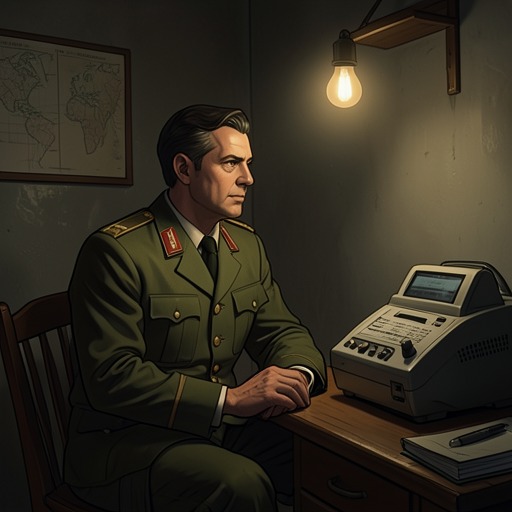
Upstairs, Comandante Monti, commander of the front, types a request to Luanda for more personnel and weapons. The front’s only armoured personnel carrier has been knocked out by a mercenary. Monti’s concern is immediate and conditional: if the enemy attacks with armoured carriers of its own, his force may have to give ground and retreat. The villa headquarters thus concentrates the gap between the scale of the territory to be defended and the limited means available to defend it.
The headquarters also briefly receives visitors from beyond the front. A television crew from Lisbon arrives for a two-day stay before returning to Portugal. Its leader, Luis Alberto, is described as a lively, restless journalist; he and Monti already know one another, having both come from Angola and perhaps from Benguela itself. Their existing familiarity makes introductions unnecessary, an ordinary social connection set against the military urgency surrounding them.
Capture and Threat to Luanda
A later message, delivered by a wounded signalman and read aloud by Pablo, reports that Benguela has been captured and that all the Cuban fighters died in the fighting for the town. The report is followed by an assessment of what the loss could mean: the advancing force is said to be heading for Luanda, six hundred kilometres away, with no strongpoints or defensive lines along the route.
The distance that earlier made Benguela a remote oasis now measures the possible speed of danger. The message warns that a determined force travelling day and night could reach Luanda as soon as the next day. Benguela’s place in the narrative therefore changes from a quiet, sparsely occupied city and vulnerable headquarters to a reported point of enemy advance, exposing how little separation remains between the distant front and the capital.